Ystrad Einion Lead Mine - Wales
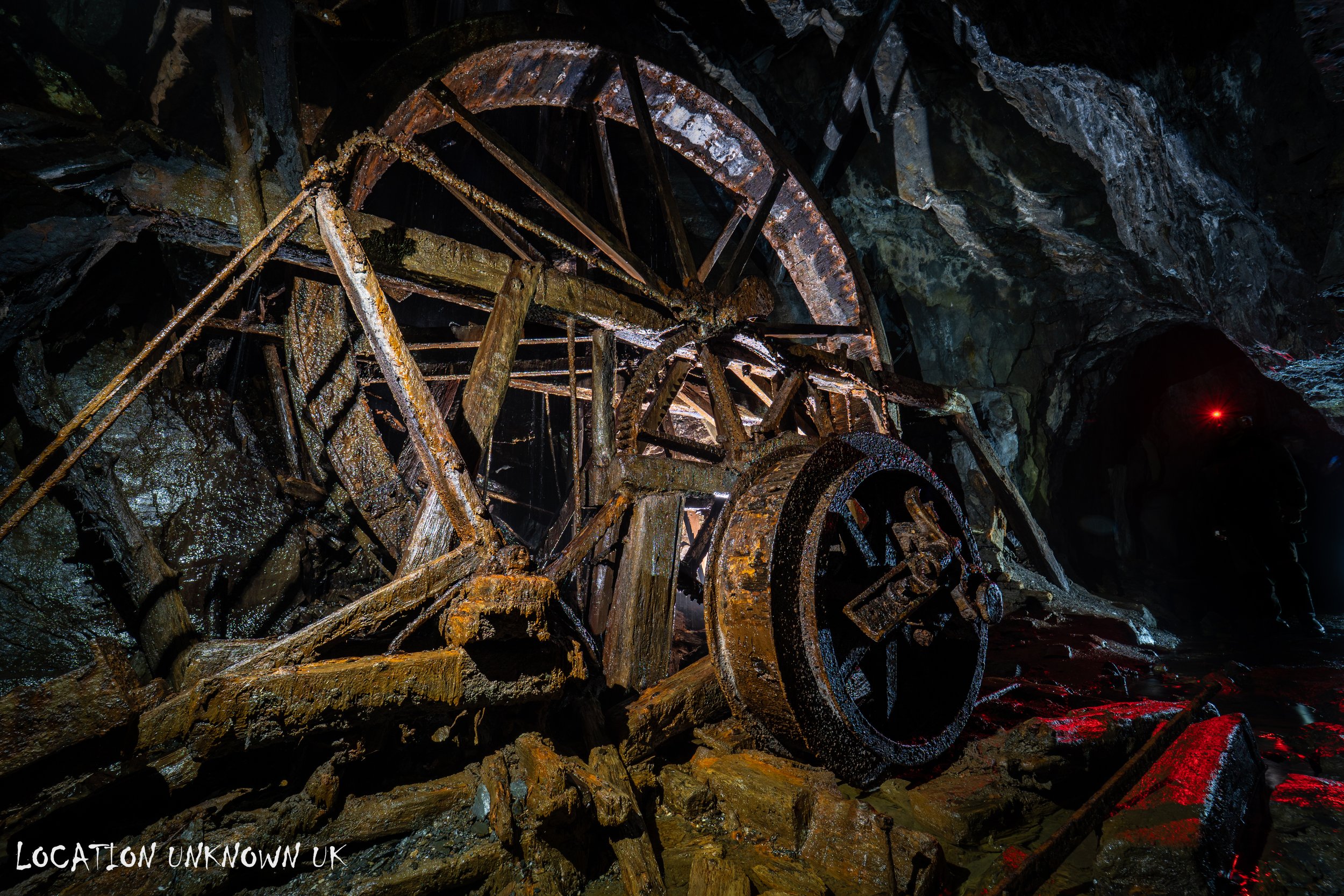
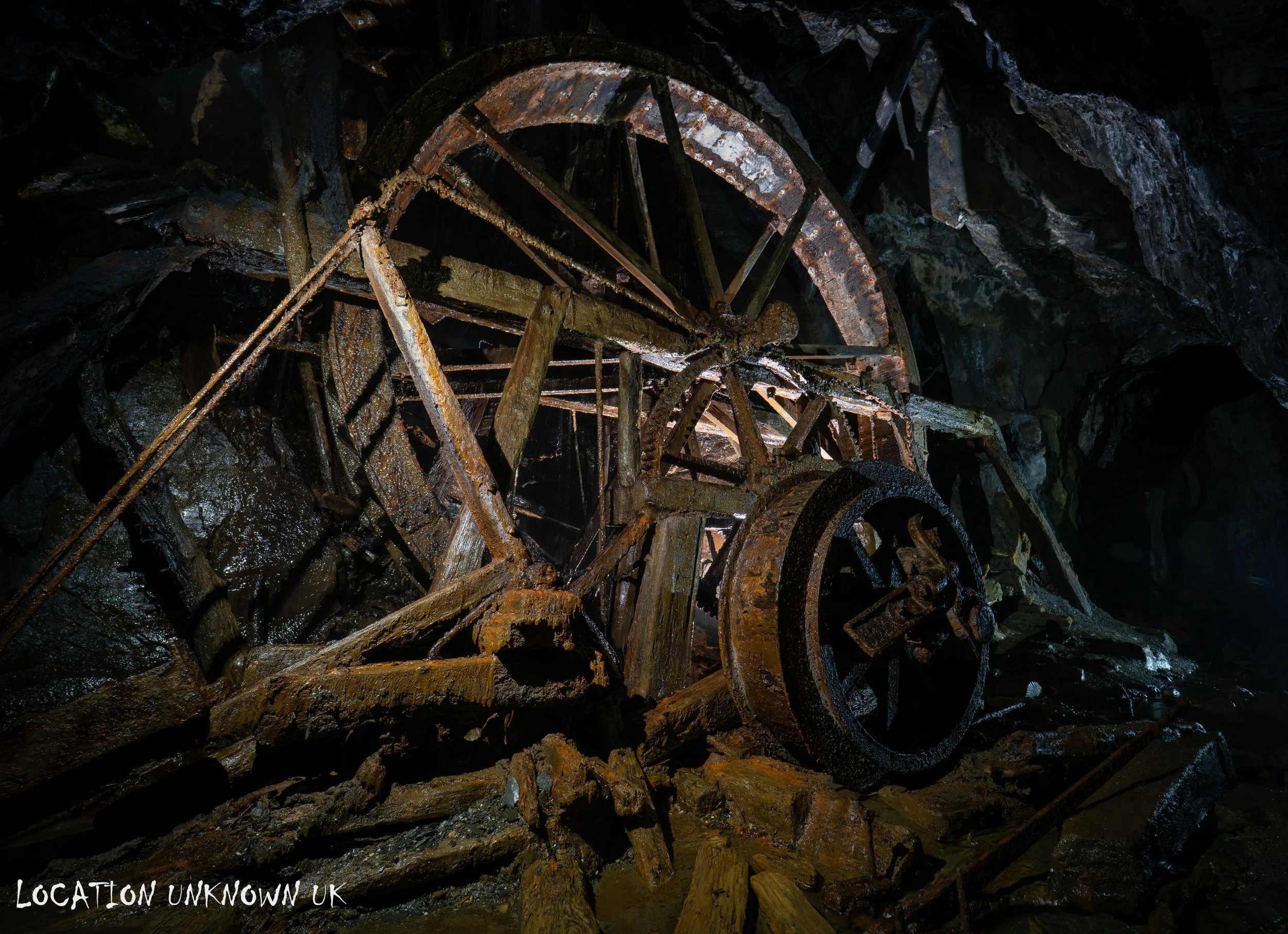
It’s not very often you have the opportunity to see an industrial sized waterwheel still in situ in former mine workings. In fact, there’s only one other that I’m aware of, although there will no doubt be surviving examples hidden away, either waiting to be unearthed one day or kept quiet within a small, known circle. The day started off with a few pleasant visits to some rural Welsh chapels. These buildings seem to be in every small town and village in Wales, so there always a good way to fill the day.
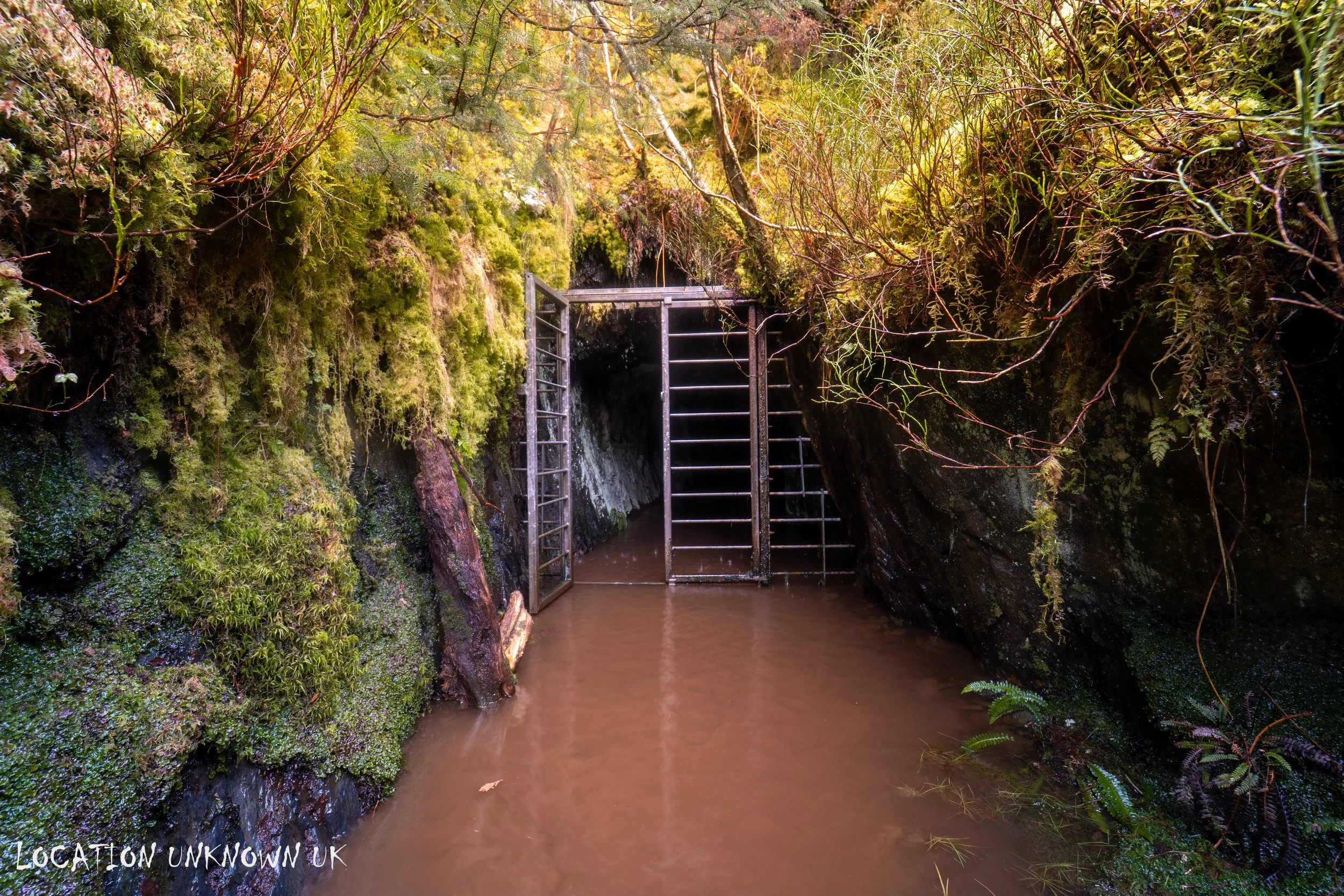
After navigating the treacherous remote back roads of mid Wales, we arrived at the pin and began searching. The pin I had was a rough one, and we began looking around the obvious trails until I remembered reading something about a “high level adit.” Unsure if this was the one we wanted and unable to confirm due to bad signal, we saw what looked like an overgrown incline and decided it would likely be at the top. A fair way up, I decided that this was heading too far out of the area and was likely to be an overgrown logging road, so back down it was. At the bottom of the incline we each split up to cover more ground, and after another twenty minutes or so I heard what sounded like a cheerful yelp from one of the boys and headed over. It turns out the adit was about 200 yards from where we had parked the car.
The workings that are currently accessible aren't too extensive and I was aware of the industrial relics we needed to see. The waterwheel is the first thing you come across along the main drag, and it doesn’t disappoint. I remember my last trip into Aberlafenni Slate Mine, coming across the underground crane there was quite a disappointment. Although everything else there, including the pristine condition Eimco, made for an epic day, I’d imagined the crane to be the size of one used to build skyscrapers, and this one looked like it would struggle to lift a Vauxhall Corsa.
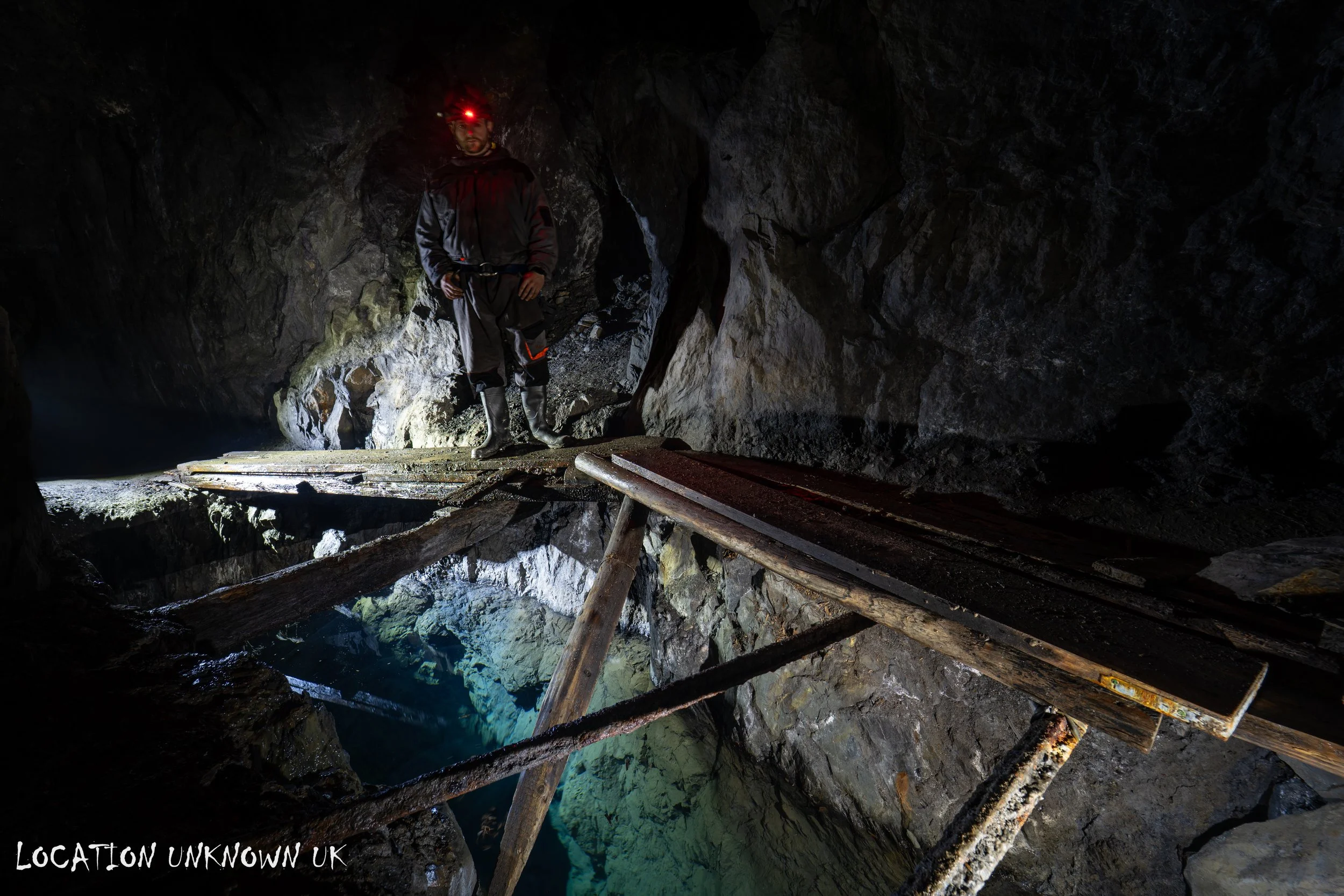
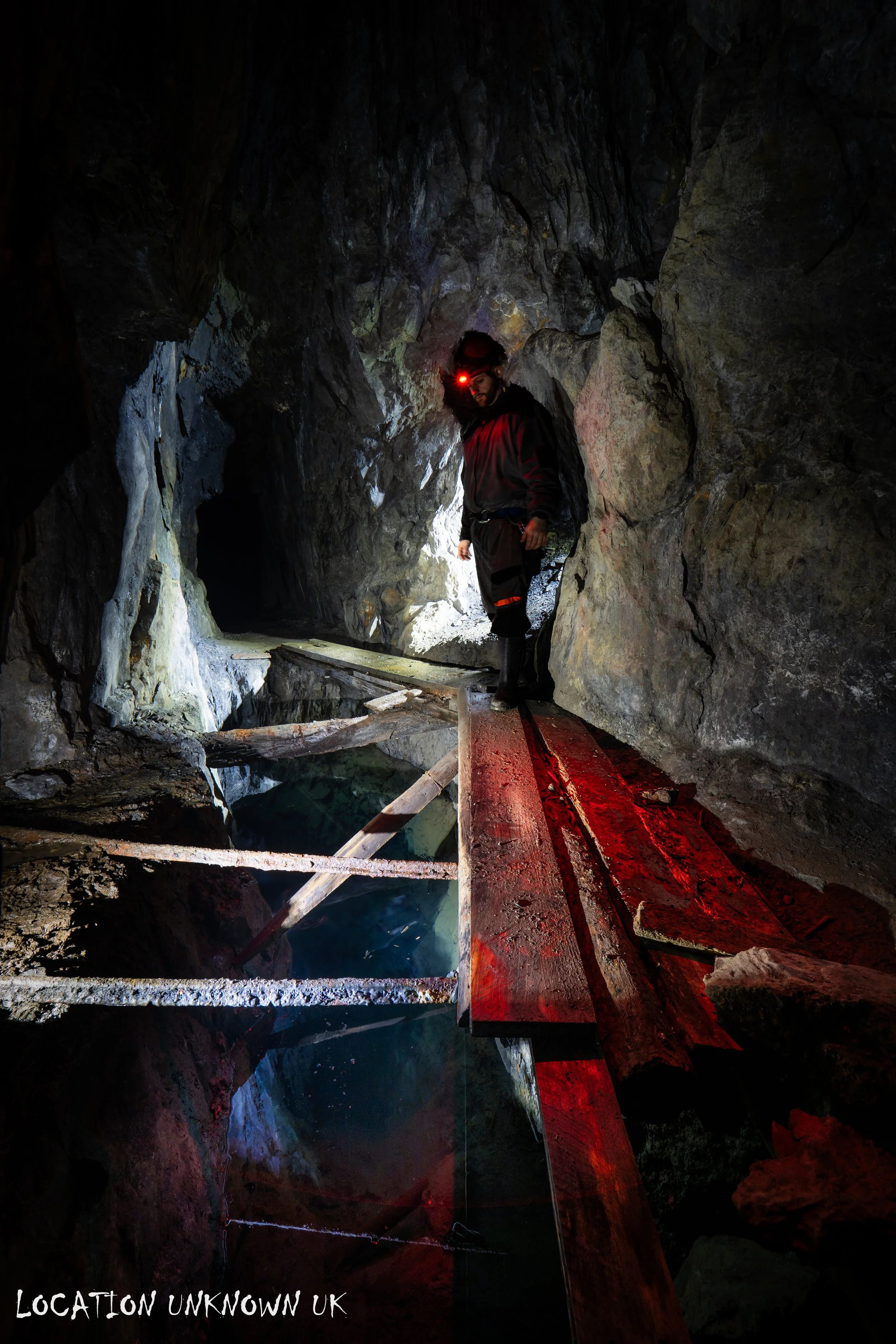
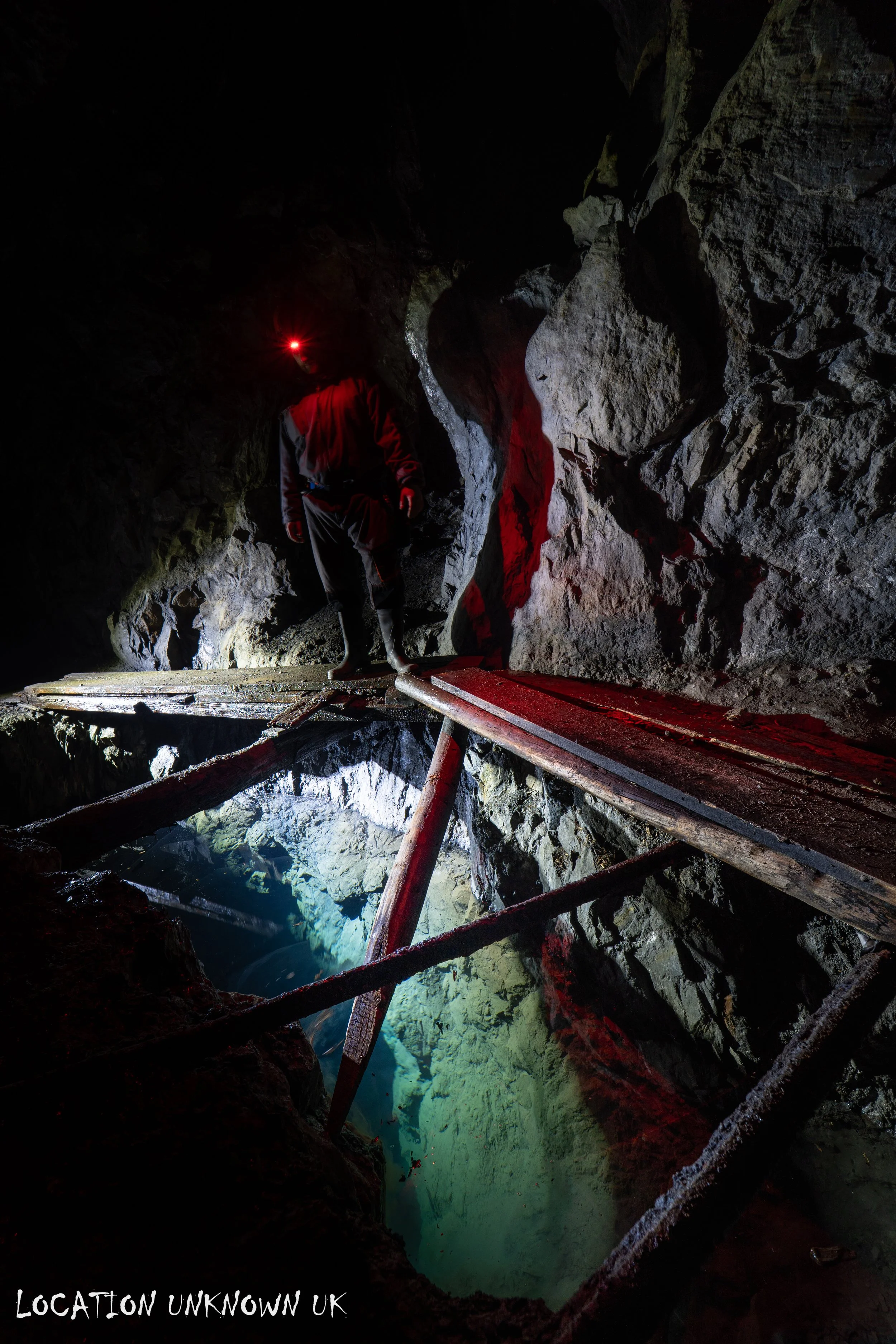
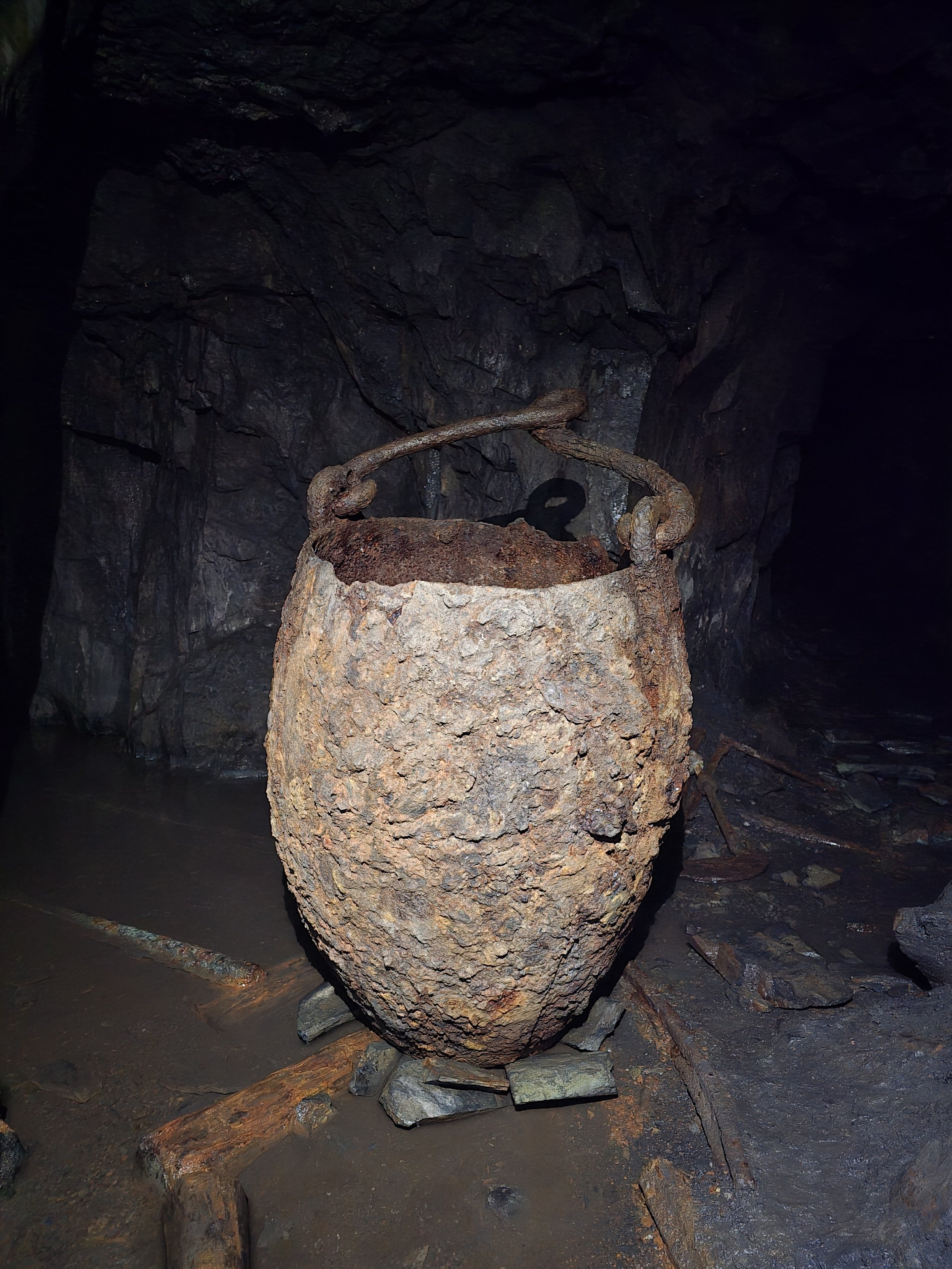
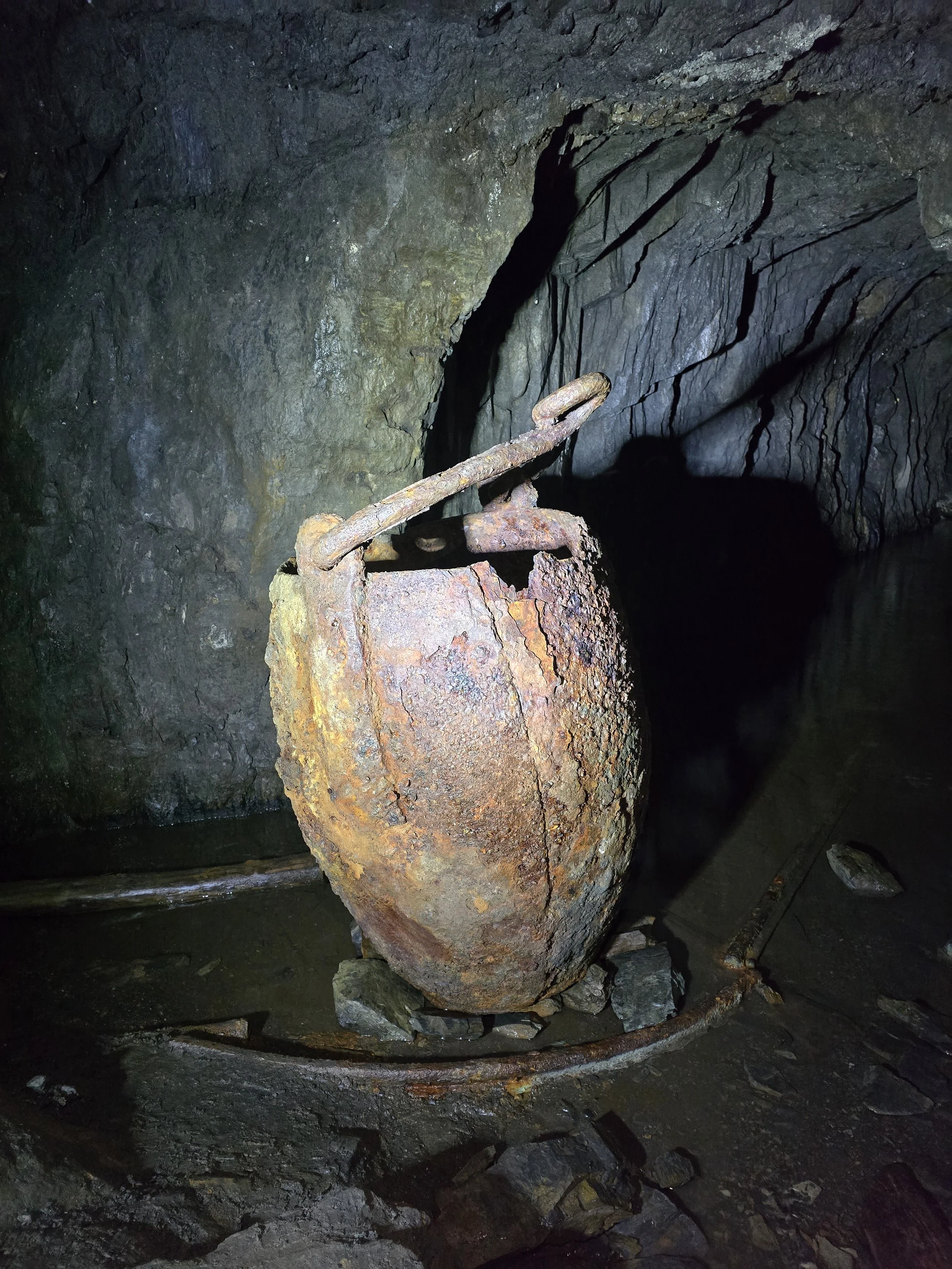
This wasn’t the case for the waterwheel, if anything it was even larger and more impressive than it looked in the photos I’d seen beforehand. Further on there are flooded workings with ladderways still in place, visible in the shafts below which look bottomless due to the pristine clear water; the blue slate effect gives it an even more mysterious grandeur. Following deeper through the workings you come to the bottom of a big, wet, open shaft. Past here is a handline climb up to an original kibble. This was also bigger than I’d imagined, as the ones I’ve seen before have been about half this size. It was big enough to climb into, but given its age and importance I decided against such a heinous act.
Given how photogenic some of these features were, we probably spent as long photographing the place as we did exploring it.
History
This Welsh lead mine was first worked around 1700, with intermittent attempts at extraction throughout the 18th and early 19th centuries. More serious development began in the 1870s when new investors introduced modern mining infrastructure including an engine shaft, crushing mill, ore dressing equipment, and water powered pumping systems. Despite this investment, the mine employed only a small workforce, recorded as 11 men in 1891 and production remained modest, yielding limited quantities of lead, zinc, copper, and small amounts of silver recovered from galena. The underground workings extended to approximately 90 metres deep and were arranged across several levels connected by shafts, with water management relying on large waterwheels. Although technically advanced for its scale, the operation struggled due to poor ore yields, high costs, and increasing competition from cheaper imported metals during the late 19th century. After continued unprofitability, the mine ceased operations permanently in 1903, and a large water wheel, used to power a mechanical system of rods to drain lower levels of the mine, has been left behind.