Broadmoor Lunatic Asylum - Berkshire
The original Broadmoor site closed after 150 years of service back in 2019 when the new complex next door opened its doors. Its abandonment was well covered by the press, and given its notorious reputation and heavy security, I assumed it would be years before anyone would try to get inside, if anyone ever did at all. A few years later a group managed to gain access, however their entry was spotted from the active site and triggered a full hospital lockdown involving a police helicopter search. It was understandable, whoever was watching the cameras at the time likely saw hooded figures and couldn’t rule out an escape, so precautions were taken. The group were eventually taken into custody and let out the next day due to well you know, not breaking any law.
The incident put most people off, but it also proved the place was possible to those willing to try. There may have been others who followed quietly; it wasn’t until August 2025 that attempts became more frequent and public though. After seeing someone I know manage it and share their explore it seemed like a go er. They were reluctant to reveal their point of entry, and rightly so to be honest. After seeing this we decided to head down and get it done whilst it was still possible. The first layer of fence is metal and arch over at the top preventing the possibility of patients climbing out from the inside. The second layer of fence is predominantly brick with a section returning to metal, both layers are around 21ft in height or just under 6 and a half metres, not a height you want to f*ck around at. There have been around 26 escape attempts during Broadmoor's life span with fewer than 10 being successful with James Saunders in the early 1990s being the most recent. I doubt these patients would have had a security free site to contend with or a 6metre ladder to hand either.
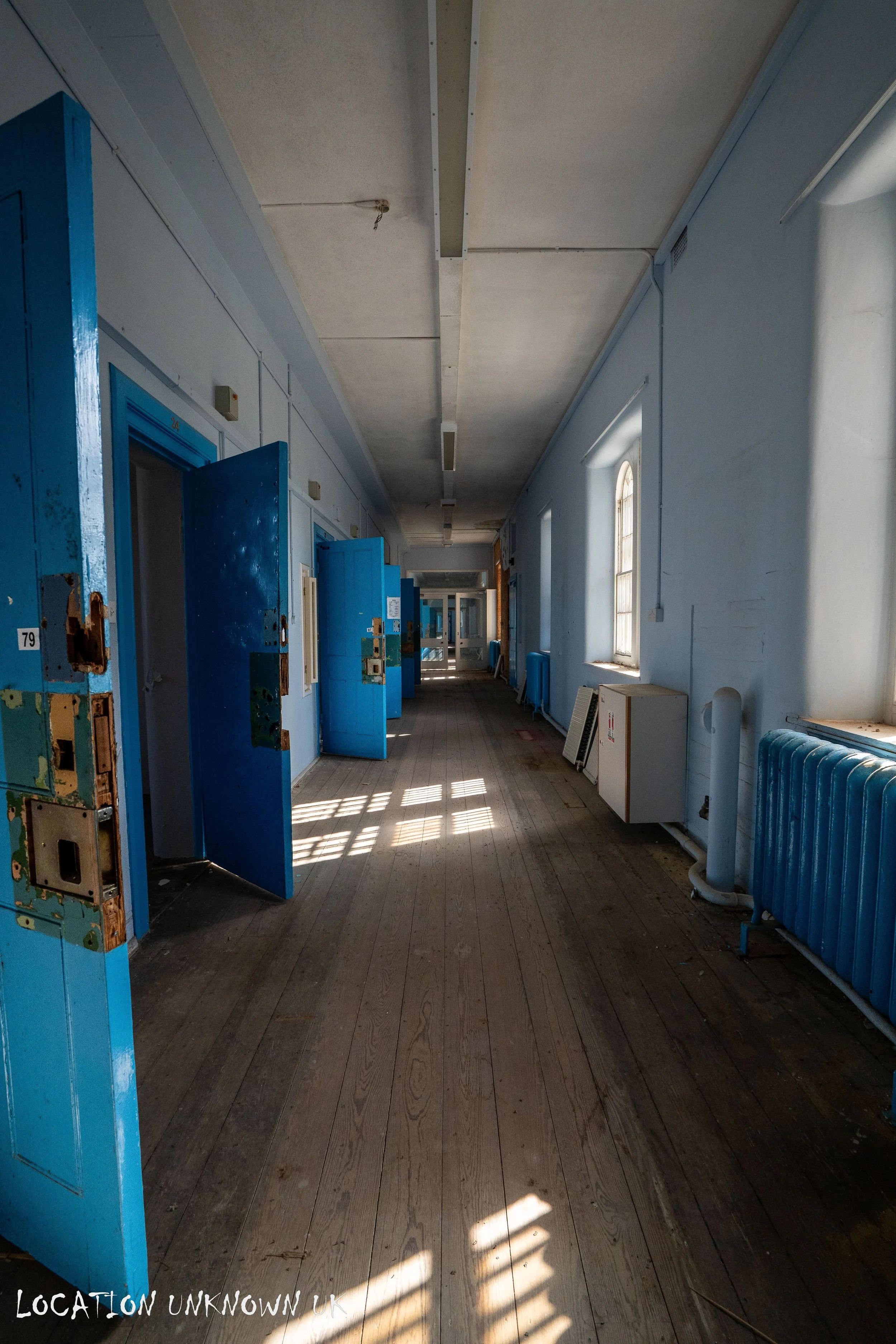
Having seen the Asylum walls for years through photographs in books of one of the many documentaries made about the place, nothing will prepare you for how intimidating and huge they look up close. Our first thoughts were absolutely no way is this being done by going over the top. Even with our 6metre ladder it looked impossible and anxiety levels were starting to rise. We scoped out the perimeter and found what looked like to be the lowest point of the fence and noticed a small hole that had recently been cut out of the metal section with a suspicious looking ladder resting against the inside of the wall. Unfortunately this hole had been patched up meaning it was up and over for us. Without going into too much detail I hope I never see an extendable ladder bend the way this one did again in my life. We eventually got inside. The first thing we found was the chapel, surprisingly well preserved and by far the best kept space on the site. It was easy to imagine the services that must once have been held there, attended by some of the institution’s infamous inmates. I tried to find public information about which cells high-profile patients like Charles Bronson and Peter Sutcliffe occupied, but the records eluded me, so we made a point of checking each cell briefly.
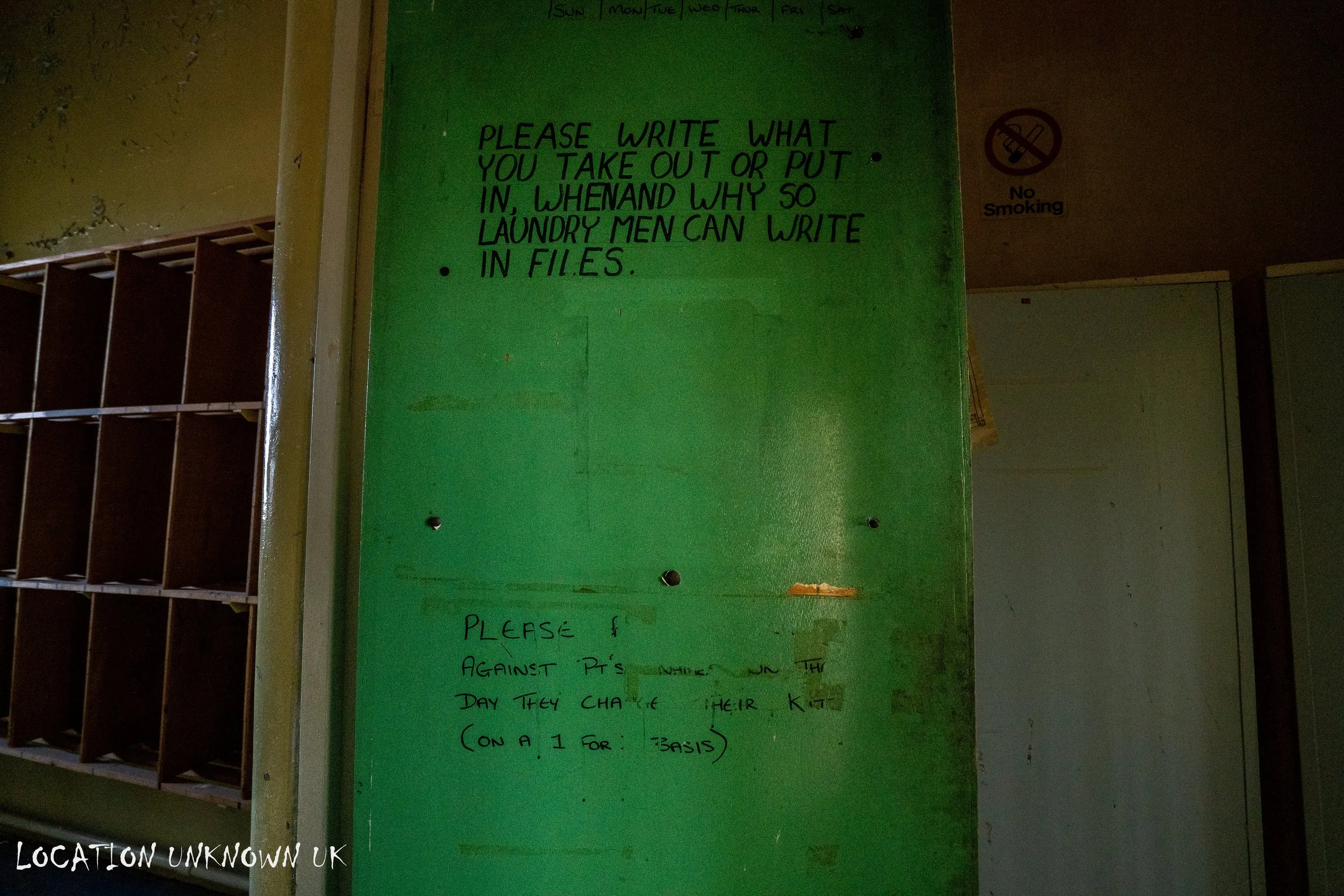
There were 6 blocks or wings with one having burnt down back in 2024, the higher the floor the older they seemed to look and many of them still had a personal touch to them. Whether it be posters on the walls or stickers plastered to the doors it really did feel like walking back in time. In my opinion this is the best thing about this hobby, being able to see places you would never get to see under normal circumstances, and experiencing them naturally without it being a manufactured and sanitised experience with all the health and safety bollox attached. Most of the cameras on the old site were the classic big chunky outdated ones and were easily spotted to be defunct due to pointing at the sky. However there were a couple of the newer 360 degree spinning ones about and we decided not to push our luck by heading near them. There was a modern sports facility with a swimming pool we would miss due to this but we were there to see the asylum and not its later attachments. After spending the morning exploring the site thoroughly we headed back out the same way, albeit with slightly less faff and once again without being detected by the neighbouring site or any passer by dog walkers, of which there were plenty.
History
Broadmoor Hospital, originally known as the Broadmoor Criminal Lunatic Asylum, is one of Britain’s most notorious psychiatric institutions. Its origins trace back to 1807 when a Commons committee first recommended a dedicated state asylum for the criminally insane, though it was not until the late 1850s that the idea was realized. Broadmoor opened in 1863 in Crowthorne, Berkshire, on a 53-acre site chosen for its isolation, and its first patients were five women admitted on 27 May 1863, followed by men from 27 February 1864. By 1868, the complex included five blocks, four for men and one for women, with another male block added in 1902, all surrounded by walls and terraced grounds that contained orchards, gardens, and farmland. Reflecting Jebb’s intention that it be a hospital rather than a prison, Broadmoor emphasized work, recreation, chapel attendance, and structured daily life, with patients employed in gardening, tailoring, carpentry, or music and theatre. For its first decades, it was administered by the Home Office through a Medical Superintendent and council until jurisdiction transferred in 1949 to the Ministry of Health, later functioning as a special hospital for high-security patients. Overcrowding led to the opening of Rampton branch asylum in 1912, while during the First World War part of Broadmoor was repurposed as Crowthorne War Hospital for mentally ill German POWs. The institution was never free of controversy, however in 1952, the escape of child-killer John Straffen, who murdered again during his absence, prompted the installation of Broadmoor’s infamous siren system, warning local towns of escapes until its decommissioning in 2018. Subsequent reforms followed inquiries into security, including the 1999 Fallon Inquiry, while the Victorian buildings themselves were declared unfit for purpose in 2003. By the 21st century, Broadmoor’s challenges included underfunding and low staff morale, with the Care Quality Commission rating it “Inadequate” in 2015 before improvements raised this to “Good” in 2018. Female services were removed in 2007, and a new purpose-built hospital complex officially opened in December 2019, housing only male patients. Over its long history, Broadmoor has confined many infamous figures, including painter Richard Dadd, lexicographer William Chester Minor, poisoner Christiana Edmunds, would-be regicide Edward Oxford, gangster Ronnie Kray, serial killers Peter Sutcliffe and Robert Maudsley, and notorious prisoner Charles Bronson. Its reputation was further tainted by revelations that Jimmy Savile had exploited access to abuse patients in the 1980s. Public fascination has remained constant, amplified by the eerie sirens, secrecy, and the hospital’s role as both sanctuary and prison, explored in works like Mark Stevens’s ‘Broadmoor Revealed’ and documentaries such as ‘Inside Broadmoor’. The former site closed in December of 2019 and a recent fire occurred in May 2024, there is currently a proposal to turn the former site into a hotel complex retaining the grade 2 listed buildings.